What is Substack?
Substack is a publishing platform where writers, podcasters and video creators build an audience and earn money through paid subscriptions. It is free to start, with no monthly fees or tiers. Instead, Substack keeps 10% of subscription revenue, and creators receive the rest minus credit card fees. The company was founded in 2017 by Chris Best, Hamish McKenzie and Jairaj Sethi and is based in San Francisco.
Beyond email newsletters, Substack includes podcast hosting with a recording studio, video and live video, subscriber chat and comment threads. Its iOS and Android apps, Notes feed and recommendation system help readers discover new publications, which gives writers a built-in growth network. Substack also offers revenue tools such as welcome sequences and win-back campaigns, plus a legal support program called Substack Defender.
Substack at a glance
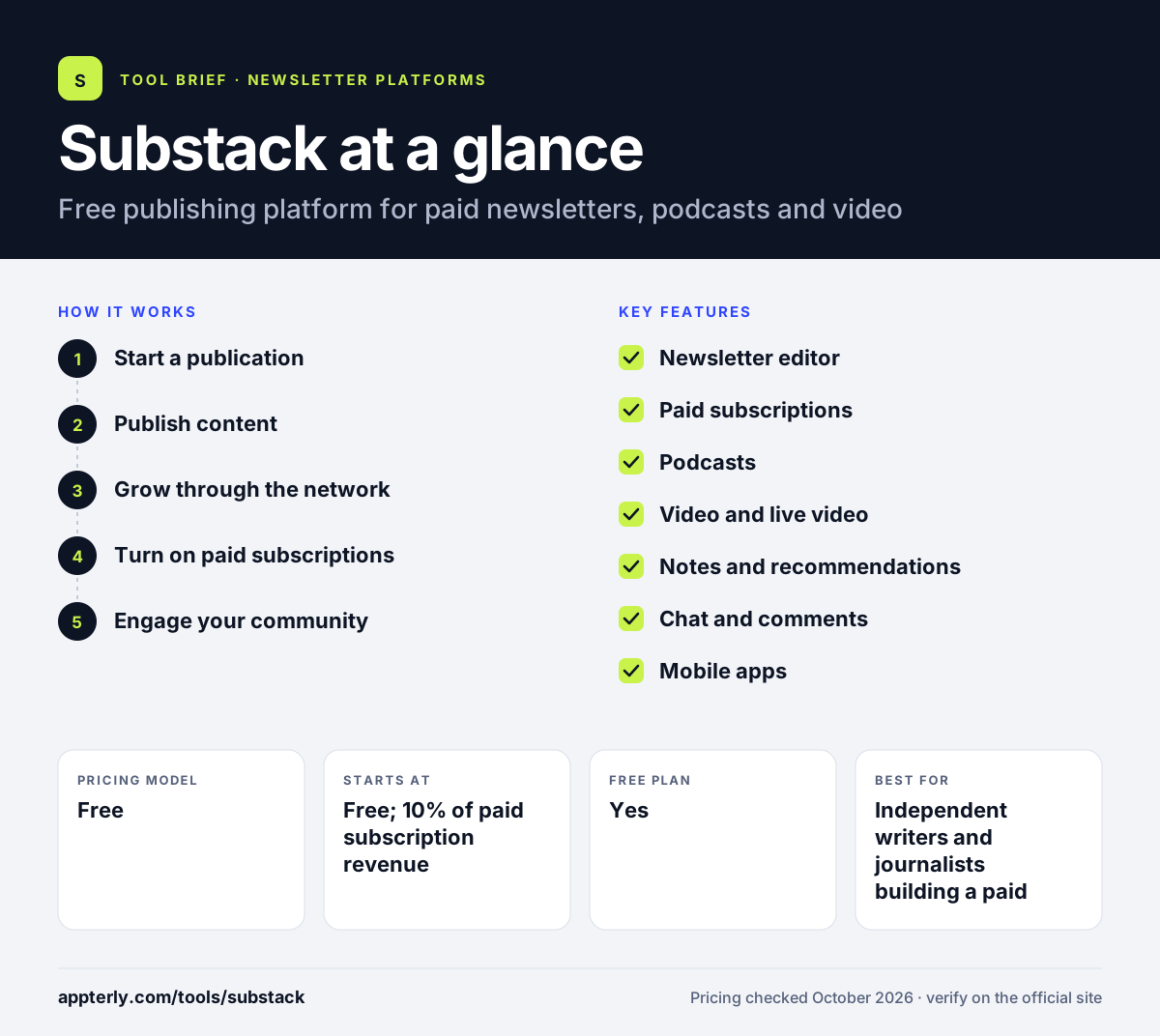
How does Substack work?
- Start a publication
Create a free account, name your publication and import an existing list if you have one.
- Publish content
Write posts, record podcasts or post videos, and send each one to subscribers by email and in the app.
- Grow through the network
Use Notes, recommendations from other writers and app discovery to reach new readers.
- Turn on paid subscriptions
Connect payments, set monthly or yearly prices and place selected posts behind the paywall.
- Engage your community
Use chat, comments and live video to keep subscribers active, and track results in analytics.
Substack key features
Newsletter editor
A distraction-free editor with formatting, embedded media, scheduling and archive management.
Paid subscriptions
Charge readers monthly or yearly, with Substack taking 10% of revenue.
Podcasts
Record in a built-in studio and publish to Substack, Apple, Spotify and YouTube, including paid episodes.
Video and live video
Post videos and host live sessions with subscribers inside the app.
Notes and recommendations
A social feed and cross-recommendations help readers find new publications.
Chat and comments
Run subscriber chats and comment threads with moderation tools.
Mobile apps
iOS and Android apps for reading, listening, watching and discovery.
Why use Substack?
- There is no upfront cost, so you only pay when you earn from paid subscribers.
- The app and recommendation network can bring new readers without outside marketing.
- Newsletters, podcasts, video and community live in one place.
- Setup takes minutes, with no design or technical work needed.
- Substack Defender offers legal support for eligible writers.
Who is Substack best for?
A good fit for
- Independent writers and journalists building a paid newsletter
- Podcasters who want paid episodes alongside written posts
- Commentators and experts with a personal audience
- Creators who want a built-in discovery network
Less suited to
- Businesses that need marketing automation, segmentation and ecommerce flows
- Large paid publications that would save money with a flat-fee platform
- Brands that need full control over site design and custom code
Substack pricing
| Pricing model | Free |
|---|---|
| Free plan | Yes |
| Free trial | Not confirmed |
| Starting price | Free; 10% of paid subscription revenue |
Substack charges no platform fees, tiers or contracts. When you sell paid subscriptions, Substack keeps 10% and credit card processing fees are also deducted.
Prices checked October 2026. Vendors change plans often, so confirm on the official Substack pricing page before you buy.
Substack pros and cons
Pros
- Free to start with no monthly fees
- Built-in discovery through the app, Notes and recommendations
- Writing, podcasts and video in one platform
- Very fast setup
Cons
- 10% revenue share gets expensive as income grows
- Limited design customization
- Few marketing automation and segmentation tools
Substack integrations and platforms
Works with
Available on
Substack alternatives
See the full shortlist in Best Newsletter Platforms.
Substack FAQ
Is Substack free?
Yes. Substack is free to use for free newsletters, podcasts and video, with no platform fees, tiers or contracts. If you turn on paid subscriptions, Substack keeps 10% of that revenue, and credit card processing fees are also deducted. Writers keep the remaining revenue from their paid subscribers.
What is Substack used for?
Substack is used to publish newsletters, podcasts and videos and to earn from paid subscriptions. Writers, journalists, podcasters and experts use it to reach readers by email and through the Substack app, grow through recommendations and Notes, and build community with chat, comments and live video.
Substack vs beehiiv: what's the difference?
Substack is free to start and takes 10% of paid subscription revenue, and it offers a strong reader app and discovery network. beehiiv charges a monthly fee on paid plans but takes 0% of subscription revenue, with more growth tools, ad network options and website design control. The better choice depends on revenue and control needs.
Is Substack good for beginners?
Yes. Substack is one of the easiest platforms for beginners because there is nothing to design or configure, and you can publish within minutes. The free model removes upfront risk, and the app can bring early readers. Beginners who later want custom design or automation may move to another platform.
How much does Substack take from paid subscriptions?
Substack takes 10% of paid subscription revenue. Credit card processing fees are also deducted, so writers receive slightly less than 90% of each payment. There are no monthly fees, so Substack only earns when its writers earn from paid subscribers.
Sources
This overview is based on Substack's official website and documentation, checked October 2026.